「深呼吸、世界の窓から」は、茨城大学の教職員や学生が体験した「海外」や「国際的なつながり」を、それぞれの言葉で語り、多様な経験を共有できる場です。読者がふと手をとめて“ほっと一息”できて、少し新しい世界に意識を向けるきっかけになるような、そんな温かい文章でつづる世界の情景をお楽しみください。(Please scroll down for the English version.)
・これまでの記事はこちらから深呼吸、世界の窓から
牛は食べ過ぎない
大学時代、アラビア語を習っていた。僕の通っていた大学では、いわゆる「第一外国語」に英語以外の言語を選ぶことができた。入学する前年にニューヨーク同時多発テロが起き、ニュースでは毎日のようにアラビア語の文字を目にした時代。多様な視点で状況を理解するためにはアラビア語を学ぶべきだと考えての選択だった(…というのは表向きの理由で、実際には苦手意識のあった英語から逃げたのだが)。
担当はシリア人のM先生と日本人のO先生。シリア研修も毎年行われていたが、僕のときはイラク戦争の影響で中止となった。その後の内戦によるアレッポなどの都市の惨状を思うと、あのとき行っておけばよかったと思わずにはいられない。
コーランそのものがアラビア語の教科書のようなところがあり、自ずとイスラーム文化に浸かる。ラマダーンになると、クラスの中で「私たちも断食しよう」という呼びかけが回る。食欲旺盛な僕は一度も参加しなかったけれど、「飯を食わず空腹にいる時間を共有した相手とは絆が深まるんだよ」「ラマダーン明けの飲食のなんとすばらしいこと!」といった話を聞くにちょっと羨ましくなったものだ。
O先生は「宗教と文化」という授業も担当していた。あるとき先生が授業の冒頭、「すべては天気のせいです」と発言した。ちょうど今みたいな梅雨の曇り空だったか。当時の僕は、初心な大学生らしく、人間の実存についての悩みを抱えていて、また人見知りで友人も少なかったから、鬱々としていた。それが、「すべては天気のせいです」という言葉を聞いて、急に救われた気持ちになったのを覚えている。ただしこの言葉がコーランに書かれているのかは確認していない。
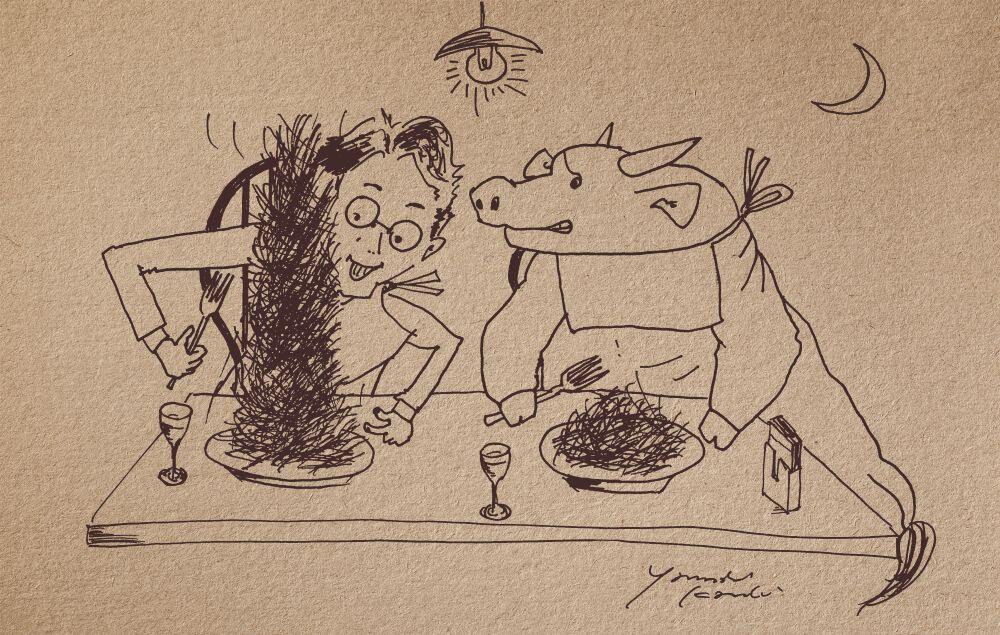
「牛は食べ過ぎない」というのもあった。
僕のいたキャンパスは昼休みが20分しかなかったので、授業中の教室で食事をとることが許されていたのだが、O先生の授業に限っては「食事禁止」だった。その理由が「牛は食べ過ぎない」ということにあるらしい。つまり、本来動物は必要なものを必要な分だけ食べれば満足するはずなのに、それを好きなときに好きなだけ食べようとするのが、欲を持った人間なのだと。だから授業中にご飯を食べるなんてことはせず自身を律せよ、ということだと僕は解釈した。ラマダーンともつながる発想だ。
ちなみに後で調べたところによると、牛もおいしい飼料を与えられるとつい食べ過ぎてしまうらしい。「ほら見たことか」と一瞬でも思ってしまった僕は、それさえも飼料を食わせすぎる人間の方の業(ごう)の問題だということへの自覚が薄すぎるかもしれない。40過ぎてもなお食欲旺盛な中年は、やはりラマダーンを経験した方がよさそうだ。
文・写真:山崎一希(広報・アウトリーチ支援室)
A Deep Breath at the Window to the World
Cows Don’t Overeat
In college, I studied Arabic. At my university, you could choose a “primary foreign language” other than English. The year before I enrolled, the 9/11 attacks happened in New York, and Arabic script was everywhere in the news. I told myself I chose Arabic in order to understand the world from multiple perspectives. (That was the official reason. In reality, I was just running away from English, which I wasn’t very good at…)
My instructors were M-sensei from Syria and O-sensei from Japan. The program usually included a study trip to Syria every year, but when it was my turn, it was canceled because of the Iraq War. Later, when I saw the devastation of cities like Aleppo in the civil war, I couldn’t help wishing I had gone when I had the chance.
The Qur’an itself is almost like a textbook of Arabic, so you naturally end up immersed in Islamic culture. When Ramadan came around, someone in class would suggest, “Let’s try fasting too.” I loved food too much to ever join in, but I have to admit I felt a little envious hearing things like, “You really bond with people you share hunger with,” and “The food after Ramadan tastes unbelievably good!”
O-drndri also taught a class called “Religion and Culture.” One day he began a lecture by saying, “Everything is the weather’s fault.” It was probably a gloomy, rainy-season day like today. Back then, I was a shy, slightly miserable college student, worrying about the meaning of life and not having many friends. Hearing that line suddenly made me feel lighter, as if I’d been let off the hook. I should add, though, that I never checked whether that phrase actually appears in the Qur’an.
Another thing he used to say was, “Cows don’t overeat.”
Our campus only had a 20-minute lunch break, so eating during class was usually allowed. But not in O-sensei’s class—no food allowed. The reason, apparently, was that “cows don’t overeat.” In other words, animals are supposed to eat only what they need, when they need it. Humans, on the other hand, are greedy—we try to eat whatever we want, whenever we want. So don’t snack during class; exercise some self-control. That’s how I understood it. It ties in nicely with the spirit of Ramadan.
Incidentally, I later looked it up and found that cows, if given tasty feed, will happily overeat. For a brief moment I thought, “Aha, so that’s not true!” But maybe that just shows how little I was thinking—after all, it’s humans who give them too much feed in the first place.
Now that I’m over forty and still have a hearty appetite, maybe it’s time I finally tried Ramadan.
Text and photo by Yamazaki Kazuki (Office of communications and outreach)